

Table of Contents
- Step 1: Assess Your Closet Favorites and Frequently Worn Clothes
- Step 2: Identify Why Certain Outfits and Pieces Work for You
- Step 3: Take a Personal Style Quiz to Define Your Style Descriptors
- Step 4: Collect Visual Inspiration and Create a Mood Board
- Step 5: Explore Fashion Aesthetics and Your Style Identity
- Step 6: Generate Personal Style Outfit Ideas and Experiment
- Step 7: Build a Capsule Wardrobe and Apply the 70/30 Rule
- Refine Your Personal Style for Your Body, Budget, and Lifestyle
- Frequently Asked Questions
Last Updated: October 18, 2026
Step 1: Assess Your Closet Favorites and Frequently Worn Clothes
The first step in finding your personal style is to look at what you already own and actually enjoy wearing.
Start by pulling out the pieces you reach for most often — the jeans that always feel right, the sweater you keep repeating, the dress you feel confident in, or the jacket that seems to work with everything.
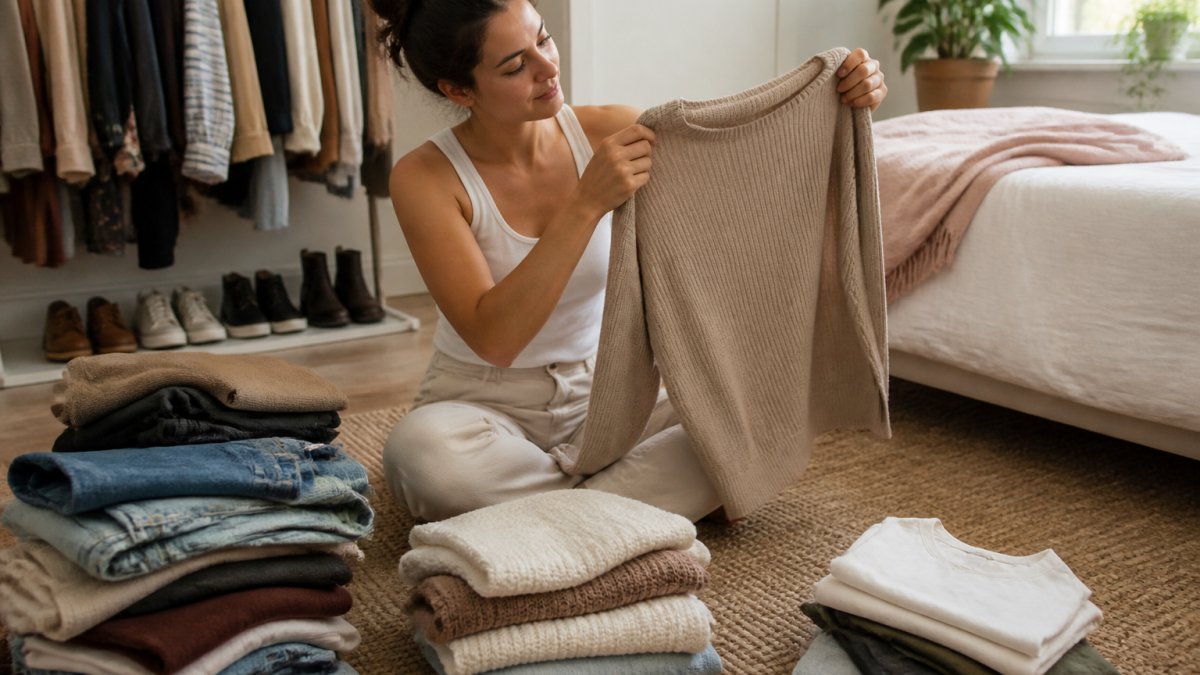
As you look at those favorites, pay attention to a few things:
- Color: Are you drawn to neutrals, earthy tones, bold colors or a mix?
- Fit: Do you prefer relaxed, tailored, fitted or oversized silhouettes?
- Fabric: Are there certain textures or materials you naturally gravitate toward?
- Lifestyle: Which pieces work best for the way you actually spend your time?
- Feeling: Which outfits make you feel most comfortable and confident?
You can also pay attention to what you wear over the next week or two. A quick photo or note each day can make it easier to spot patterns without turning the process into a major project.
Sort What No Longer Fits Your Style
As you review your closet, separate pieces into a few simple categories:
- Keep: You wear it, like the fit and feel good in it.
- Alter: You still love the piece, but the fit may need a small adjustment.
- Donate or sell: It no longer fits your lifestyle, your preferences or the way you want to dress now.
You do not have to get rid of something simply because you have not worn it recently, but it is worth asking why it keeps getting passed over.
Pro Tip: Take photos of the outfits and individual pieces you love most. Over time, those images become an easy visual reference for the colors, shapes and combinations that consistently work for you.
What the Closet Audit Tells You
Once you step back and look at your favorites together, patterns usually begin to appear. You may notice repeated colors, similar silhouettes or certain fabrics showing up again and again.
Write down three to five traits you see most often. Those patterns become the starting point for defining your personal style.
Step 2: Identify Why Certain Outfits and Pieces Work for You
Once you know which pieces you reach for most, the next step is figuring out why they work so well for you.
For each favorite, ask yourself:
- Does it fit well and feel comfortable?
- Does it work for my actual lifestyle?
- Do I feel confident when I wear it?
- Is there something about the color, shape or fabric I consistently prefer?
You may start to notice repeated traits, like soft fabrics, easy silhouettes, neutral colors, structured pieces or outfits that transition easily from one part of your day to another.
Write down the qualities that show up most often. Those details become the foundation of your personal style — based on what genuinely works for you, not on generic fashion rules.
Step 3: Take a Personal Style Quiz to Define Your Style Descriptors
A personal style quiz can help you put words to what you have already started noticing in your closet.
Ask yourself a few simple questions:
- How do I want to feel in my clothes — relaxed, polished, confident, creative, effortless?
- What does my everyday life actually look like?
- Do I prefer getting dressed to be quick and easy, or do I enjoy spending more time putting outfits together?
- Which colors, silhouettes and details do I keep coming back to?
Use your answers to create a few style descriptors that feel specific to you.
Instead of saying, “I like clothes,” you might say, “I prefer classic, easy-to-wear pieces with modern details and a mostly neutral palette.”
Those descriptors give you a simple filter when you shop. Before buying something new, ask yourself: Does this actually fit the style I’m trying to build?
Step 4: Collect Visual Inspiration and Create a Mood Board
A mood board helps you see the overall aesthetic you are drawn to, even before you can fully describe it in words.
Start collecting images of outfits, colors, textures and pieces you love. You can use Pinterest, Instagram or a simple folder on your phone.
Once you have a good collection, step back and look for patterns:
- Which colors appear most often?
- What types of silhouettes keep showing up?
- Are there certain fabrics, textures or accessories you repeatedly save?
- What is the overall feeling — relaxed, polished, feminine, edgy, minimal or a mix?
From there, narrow your favorites into a smaller digital or physical mood board. This becomes a visual reference you can use when shopping, planning outfits or deciding whether a new piece fits the style you are trying to build.
Step 5: Explore Fashion Aesthetics and Your Style Identity
Fashion aesthetics can be helpful shorthand for understanding the visual styles you are drawn to and describing your personal style more clearly.
Some common aesthetics include:
- Classic/Timeless: Clean shapes, versatile basics, neutral or understated color palettes
- Modern/Minimalist: Simple silhouettes, streamlined details and a more edited look
- Bohemian: Relaxed shapes, layered textures, earthy tones and expressive details
Most people do not fit neatly into one category — and they do not need to.
Look back at your mood board and style descriptors. Which aesthetics feel most like you? You may find that your style is a blend of two or three different influences.
Your style identity is not fixed. It can evolve as your lifestyle changes, your preferences shift and you become more confident in what feels right for you.
If you want help exploring those preferences in a more personalized way, The UPTOWN Luxe Edit can offer a curated starting point based on your style profile.
Step 6: Generate Personal Style Outfit Ideas and Experiment
Now it is time to experiment. Trying different combinations helps you see how the pieces you already own can work together and gives you a better sense of what feels most like you.
Rather than trying random outfits, use your mood board and style descriptors to create a few repeatable combinations you can return to.
Start With Anchor Pieces
Begin with one of your go-to pieces and build around it:
- Anchor: The main piece, such as jeans, a blazer, skirt or dress
- Complement: A second piece that works with the anchor in color, shape or proportion
- Finish: A layer, shoe, bag or accessory that completes the look
Try combinations you have not worn before and take a quick photo of the ones you like. Looking back at those photos can help you see which outfits felt the most comfortable, flattering and true to your style.
Turn Inspiration Into Outfit Formulas
Your mood board can also help you identify outfit formulas you naturally gravitate toward.
For example:
- Formula A: straight-leg jeans + knit sweater + ankle boots + structured tote
- Formula B: midi skirt + fitted tee + denim jacket + sneakers
- Formula C: tailored trousers + blouse + blazer + loafers
Write down a few formulas that fit your lifestyle and use pieces you already own whenever possible. These become easy starting points on days when you do not want to overthink getting dressed.
Build a Signature Detail
A signature detail is a small, repeatable element that makes an outfit feel more like you. It might be a certain jewelry style, a favorite color, a scarf, a particular silhouette or the way you layer pieces.
You do not need a dramatic “signature look.” Even one or two consistent details can make your wardrobe feel more personal.
Create a Shopping Checklist
Before buying something new, ask:
- Does this piece work with at least a few outfits I already wear?
- Does it fit my color palette and style descriptors?
- Can I picture it with pieces I already own?
- Does it fill a real gap, or am I buying it because it caught my attention in the moment?
If a piece does not fit every answer perfectly, that does not automatically make it a bad purchase. The goal is simply to shop with more intention.
Key Takeaway: Experimentation is not about trying every trend. It is about discovering the combinations, details and pieces that make getting dressed feel easier and more like you.
Do not be afraid to try something slightly outside your usual comfort zone. Small changes can help you discover new combinations without requiring an entirely new wardrobe.
Step 7: Build a Capsule Wardrobe and Apply the 70/30 Rule
A capsule wardrobe is a collection of pieces that work well together and make it easier to create multiple outfits from a smaller, more intentional selection.
The 70/30 rule can be a helpful guideline for balancing versatility with personality. Rather than treating it as a strict formula, think of it as a way to build a wardrobe where most pieces are easy to mix and match, while still leaving room for statement pieces and trends you genuinely enjoy.
Understanding the 70/30 Wardrobe Rule
The idea behind the 70/30 rule is simple: build most of your wardrobe around reliable pieces you wear often, then use the rest to bring in more color, texture and personality.
Your 70% might include:
- Everyday tops, sweaters and layering pieces
- Well-fitting jeans, trousers or skirts
- Versatile colors that work easily with the rest of your wardrobe
- Shoes and outerwear you reach for regularly
Your 30% might include:
- Statement colors, prints or silhouettes
- Accessories that reflect your personality
- Trend-driven pieces you genuinely love
- Special items that make an outfit feel more distinctive
The exact balance will look different for everyone. The goal is not to hit a perfect percentage — it is to create a wardrobe where enough pieces work together that getting dressed feels easier, while still leaving room for the styles that make your wardrobe feel personal.
Refine Your Personal Style for Your Body, Budget, and Lifestyle
Finding your personal style is not one-size-fits-all. Your preferences, budget, lifestyle and the way you like clothes to fit all play a role in what works best for you.
Consider fit and comfort: Your style should feel good on you and work with the way you like to move, layer and get dressed.
Work within your budget: Personal style is not about spending the most. It is about making thoughtful choices and choosing pieces you are likely to wear.
Match your lifestyle: Build your wardrobe around the way you actually spend your time, whether that means work, weekends, events, travel or a mix of everything.
At UPTOWN, we understand that personal style looks different for everyone. The UPTOWN Edit offers a personalized styling experience based on your size, preferences and the kinds of pieces you enjoy wearing.

For a more elevated option, The UPTOWN Luxe Edit includes a larger curated selection with coordinating accessories and a surprise element, giving you more pieces to experiment with as you refine your personal style.
Frequently Asked Questions
How can I define my personal style if I’m not sure what I like?
Start by looking at what you already own and wear most often. Pay attention to repeated colors, silhouettes, fabrics and outfit combinations. From there, collect visual inspiration and choose a few words that describe how you want your style to feel. A personal styling service like The UPTOWN Edit or The UPTOWN Luxe Edit can also give you a curated starting point based on your size, preferences and the kinds of pieces you enjoy wearing.
What is the 70/30 wardrobe rule and how does it help with personal style?
The 70/30 wardrobe rule is a flexible guideline that suggests building most of your wardrobe around versatile pieces you wear often, while leaving room for statement pieces, trends, color and accessories that reflect your personality. It is not a strict formula. The goal is simply to create enough versatility that getting dressed feels easier without making your wardrobe feel boring or overly basic.
How do I build a capsule wardrobe that matches my personal style?
Start with the pieces you already wear and enjoy most, then look for gaps in your wardrobe. Choose versatile tops, bottoms, layering pieces, shoes and accessories that work well together and fit your lifestyle. Your capsule does not have to be made entirely of neutrals or follow a specific number of pieces. The best capsule wardrobe is one that reflects your preferences and gives you enough combinations for the way you actually dress.
Can I find my personal style on a budget?
Absolutely. Finding your personal style is more about understanding what works for you than spending a certain amount. Start with what you already own, shop intentionally and look for pieces that work with multiple outfits. Sales, resale shops and boutiques can all be useful depending on what you are looking for. The goal is to choose pieces you genuinely like and are likely to wear rather than buying simply because something is inexpensive or trending.
Finding your personal style is an ongoing process, not a destination. You'll continue to discover what works for you as your life changes and your confidence grows. The key is to start with what you already know, your favorite pieces, your mood board, your style descriptors, and build from there. When you have more clarity about your personal style, getting dressed can feel easier, shopping becomes more intentional, and your wardrobe begins to feel more cohesive and useful.