


Table of Contents
- Why Shop at Local Boutiques: What Sets Them Apart
- The Real Benefits of Shopping Local
- Boutique vs. Big-Box Store: The Practical Differences
- Why Are Boutiques More Expensive: Understanding the Real Costs
- Sustainable Fashion Shopping at Boutiques
- How to Shop Local Boutiques Online and In-Store
- Frequently Asked Questions
Last Updated: October 12, 2026
Why Shop at Local Boutiques: What Sets Them Apart
Shopping at a local boutique offers something different from shopping a large chain or marketplace. The experience is often more personal, the selection is more intentionally curated, and your purchase directly supports an independently owned business.
At UPTOWN, we’ve spent years building our collection around the people who actually shop with us — choosing apparel, accessories, beauty, home and gift items that feel useful, wearable and a little different from what you’ll find everywhere else.
A boutique isn’t trying to carry everything for everyone. The value comes from having someone narrow the choices, get to know their customers and create a shopping experience that feels more personal from the moment you walk in or shop online.
The Real Benefits of Shopping Local
Shopping at local boutiques can offer benefits that go beyond the purchase itself — from supporting independent business owners to enjoying a more personal and intentionally curated shopping experience.
Money Can Stay Closer to Home
When you shop with a locally owned business, more of that spending may stay connected to the community through local wages, services, partnerships, events and other business relationships.
Local businesses may also work with nearby vendors, support community organizations or participate in local events, which can help strengthen the area’s business ecosystem.
You Support Independent Business Owners
Behind every local boutique is a business owner making decisions about what to carry, how to serve customers and how to keep the business moving forward.
Shopping local means supporting that independent business directly — along with the people, vendors and partners who help make it run.
More Personal Service
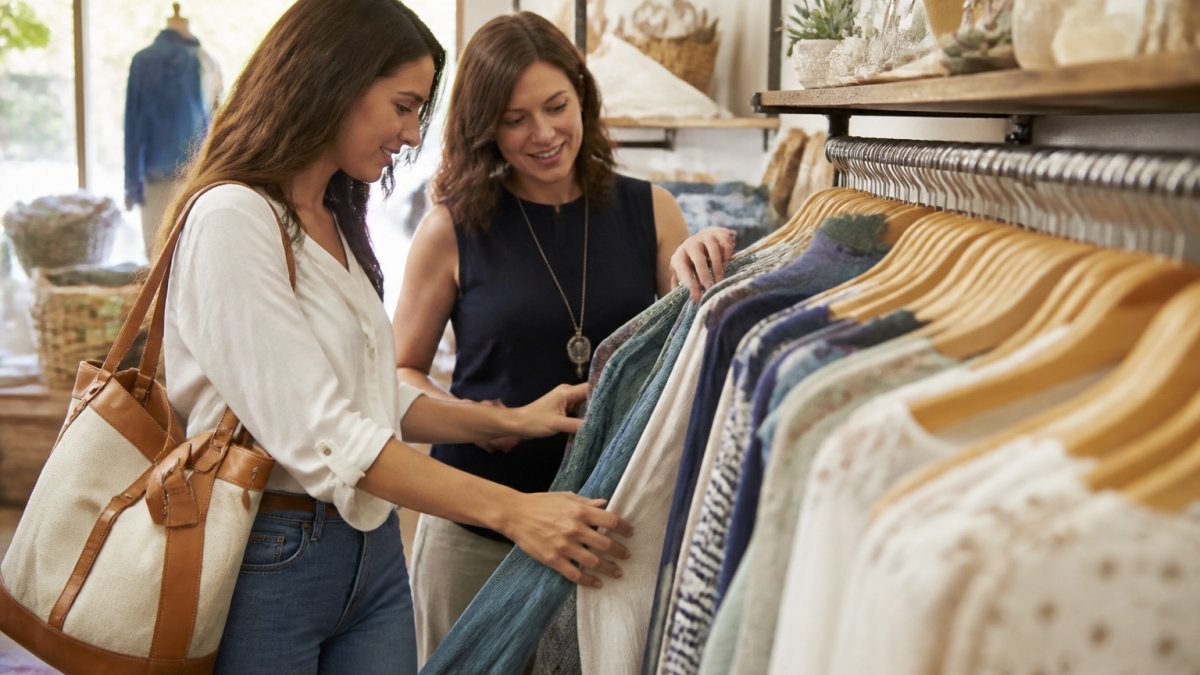
One of the biggest advantages of boutique shopping is the opportunity for a more personal experience.
Boutique owners and staff often get to know regular customers, learn their style preferences and offer more individualized guidance. That can make it easier to find pieces that fit your lifestyle, wardrobe and personal taste.
Curated Selection, Not Endless Options
A boutique typically carries a more edited assortment than a large retailer. Instead of offering thousands of similar options, the goal is to narrow the selection to pieces that fit the store’s point of view and customer base.
That curation can make shopping feel easier and less overwhelming, especially if you prefer discovering a smaller selection of thoughtfully chosen pieces.
Benefit |
Local Boutique |
Large Retailer |
|---|---|---|
Shopping experience |
Often more personal and relationship-driven |
Often designed for efficiency and scale |
Product selection |
More edited and intentionally curated |
Broader assortment and greater volume |
Customer guidance |
May include more individualized fit and styling help |
Varies by store and staffing model |
Community connection |
Directly supports an independently owned local business |
Part of a larger corporate operation |
Decision-making |
Often shaped by the owner and local customer base |
Often influenced by broader regional or national demand |
Boutique vs. Big-Box Store: The Practical Differences
Boutique shopping and big-box retail often offer very different experiences. Large retailers typically focus on broad selection, convenience and scale, while boutiques tend to offer a more edited assortment and a more personal approach.
Large retailers may make buying decisions based on broader regional or national demand, while independent boutiques often have more flexibility to shape their assortment around their own point of view and the preferences of their customers.
Neither model is automatically better for every purchase. If you value a smaller, more curated selection, personal service and a stronger connection to the business you’re supporting, boutique shopping may be the better fit. If convenience, price or a much wider selection matters more for a particular purchase, a larger retailer may make more sense.
Why Are Boutiques More Expensive: Understanding the Real Costs
Boutique pricing can sometimes be higher than what shoppers see at large retailers, but the difference often comes down to how each business buys, operates and serves its customers.
Where the Money Goes
Large retailers can often lower costs by purchasing in very high volumes, while independent boutiques typically buy smaller quantities across multiple brands. That can affect both wholesale costs and the final retail price.
- Smaller order quantities. Boutiques often purchase fewer units of each style, which can mean a higher cost per piece than high-volume purchasing.
- Multi-brand curation. Carrying products from multiple brands can involve separate minimums, shipping costs and ordering requirements.
- Personal service. Boutique shopping may include more individualized help with styling, fit, product questions and follow-up.
- Inventory risk. Independent retailers generally have fewer ways to move unsold merchandise, so buying decisions and markdowns can have a bigger impact on the business.
A higher boutique price does not automatically mean a better product, just as a lower price does not automatically mean lower quality. The best way to judge value is to consider the garment itself, how often you’ll use it and whether the overall shopping experience is worth the price to you.
A Practical Framework for Judging Boutique Prices
Rather than asking only whether an item is cheaper somewhere else, look at the overall value it offers.
- Cost per wear, not just sticker price. A piece you wear regularly may offer better value over time than something less expensive that rarely leaves your closet.
- Material and construction. Check the fiber-content label, seams, lining, buttons, closures and overall finish rather than relying on the brand name alone.
- Fit and versatility. A piece that fits well, feels comfortable and works with multiple outfits may be more valuable than a lower-priced item you rarely wear.
- Return and exchange terms. Boutique policies can vary, so check the return window, whether tags must remain attached and whether sale or promotional items are final sale before purchasing.
The goal is to look at the full picture — quality, fit, usefulness and shopping policies — rather than judging value by price alone.
Pro Tip: Before buying, ask three questions: What is this made of? How does it fit compared to what I already own? What happens if it doesn’t work out?
Clear answers to those questions can help you decide whether the piece feels worth the price for your wardrobe and your needs.
When a Boutique Is Not the Right Choice
Boutique shopping can be a great fit when you’re looking for something more curated, distinctive or personal, but it may not always be the best choice for every purchase.
For everyday basics or items where price and quantity matter most, a larger retailer may sometimes make more sense. For pieces you want to wear often, keep longer or feel especially good in, a boutique may offer more value through fit, curation and personal service.
"Eat. Drink. Shop. Local." Bag Sticker →
For budget-conscious shoppers, the best approach is simply to shop intentionally. Spend where the quality, fit, uniqueness or experience feels worth it, and choose the option that makes the most sense for each purchase.
Sustainable Fashion Shopping at Boutiques
Local boutiques are sometimes described as automatically being a more sustainable way to shop, but it isn’t quite that simple. A store’s size alone doesn’t determine how sustainably its products are made or sourced.
What a boutique can offer is a more direct shopping experience, where you may have opportunities to ask questions about the brands, materials, care and reasons a particular item was selected.
What Boutiques May Do Differently
Sustainability can look different from one boutique to another, but there are a few aspects of the boutique model worth considering:
- Smaller inventory. Boutiques often buy fewer units of each style, which can allow them to maintain a more edited assortment rather than carrying large quantities of every item.
- Intentional buying. Independent retailers can choose products based on their own customers, aesthetic and business philosophy rather than trying to serve every possible shopper.
- Closer brand relationships. Boutique owners and buyers may work directly with brand representatives, designers or vendors, which can sometimes make it easier to ask questions about materials, production and care.
- Local shopping options. In-store pickup and shopping locally can offer convenient alternatives to having every individual purchase shipped directly to your home.
None of these automatically makes a product sustainable. They simply give you additional factors to consider when deciding where and how you want to shop.
How to Ask About Where a Product Comes From
You don’t need to turn shopping into an investigation. A few simple questions can help you learn more:
- “Where is this made?” Country of origin provides useful information, but it doesn’t determine quality or ethical production on its own.
- “Who makes it?” Ask about the brand or maker if you want to learn more about the company behind the product.
- “What is it made from?” Fiber content can help you understand how a garment may feel, perform and need to be cared for.
- “How should I care for it?” Understanding the recommended care can help you decide whether the piece realistically fits your lifestyle and how you plan to wear it.
Watch Out: Don’t assume that words like “local,” “small-batch,” “natural” or “sustainable” automatically guarantee how a product was made. Look for specific information behind those claims whenever sustainability is important to your purchase.
A More Practical Way to Think About Sustainable Shopping
Sustainable shopping doesn’t have to come down to one label or type of store. It can also mean being more intentional about what you buy, choosing pieces you genuinely expect to use, caring for them properly and keeping them in your wardrobe for as long as they continue to work for you.
If sustainability is a priority, ask questions, pay attention to materials and care instructions, and choose products that make sense for your real life. Buying thoughtfully and taking good care of what you already own can be just as important as where you shop.
How to Shop Local Boutiques Online and In-Store
Many local boutiques now offer both online shopping and an in-store experience, giving you the flexibility to shop in the way that works best for you.
If you have a question about fit, availability, styling or a product detail, don’t hesitate to contact the boutique directly. That personal connection is one of the advantages of shopping with an independently owned store.
When shopping in-store, give yourself time to browse. You may discover something you weren’t specifically looking for, and talking with staff about new arrivals or styling ideas can help you get more out of the experience.
Over time, getting to know your local boutique can make shopping even easier. Sharing your style preferences, favorite brands or fit concerns can help staff point you toward pieces that may be a good match.
UPTOWN offers both in-store and online shopping. Our Local Girl High Waisted Skirt and Historic Downtown Ramona Tee are examples of pieces that reflect our mix of personal style and local connection.


Shopping at a local boutique offers a different kind of experience — one built around curation, personal service and connection to the business behind the products.
Boutique shopping may not be the right fit for every purchase, but when those things matter to you, it can make the experience feel more personal and intentional.
Frequently Asked Questions
What are the benefits of shopping at a local boutique?
Local boutiques can offer a more personal shopping experience, a thoughtfully curated selection and a direct connection to an independently owned business. You may also receive more individualized help with fit, styling and product questions, while supporting a business that is part of your local community.
Why is buying local more expensive than shopping at big-box retailers?
Independent boutiques often purchase smaller quantities across multiple brands, which can mean higher costs per item than large retailers buying at significant volume. Pricing may also reflect curation, personal service, operating costs and the inventory risk that comes with carrying smaller collections. A higher price does not automatically mean better quality, so it is still important to consider fit, materials, construction and how often you expect to use the item.
How does shopping local help the community economy?
Shopping locally supports independently owned businesses and the people and services connected to them. Local businesses may employ nearby residents, work with local vendors, participate in community events and support local organizations. The exact impact varies by business, but choosing to shop locally can help strengthen the network of businesses within a community.
Are local boutiques more sustainable than big retailers?
Not automatically. Sustainability depends on how products are made, sourced, shipped, used and cared for — not simply on the size of the retailer. Some boutiques may carry smaller inventories, offer more information about the brands they sell or encourage more intentional purchasing, but those factors do not guarantee that every product is sustainable. If sustainability matters to you, look for specific information about materials, production and care rather than relying on labels alone.